
1 April 2026: Are You Ready for the New Minimum Wage Rates?
30 March 2026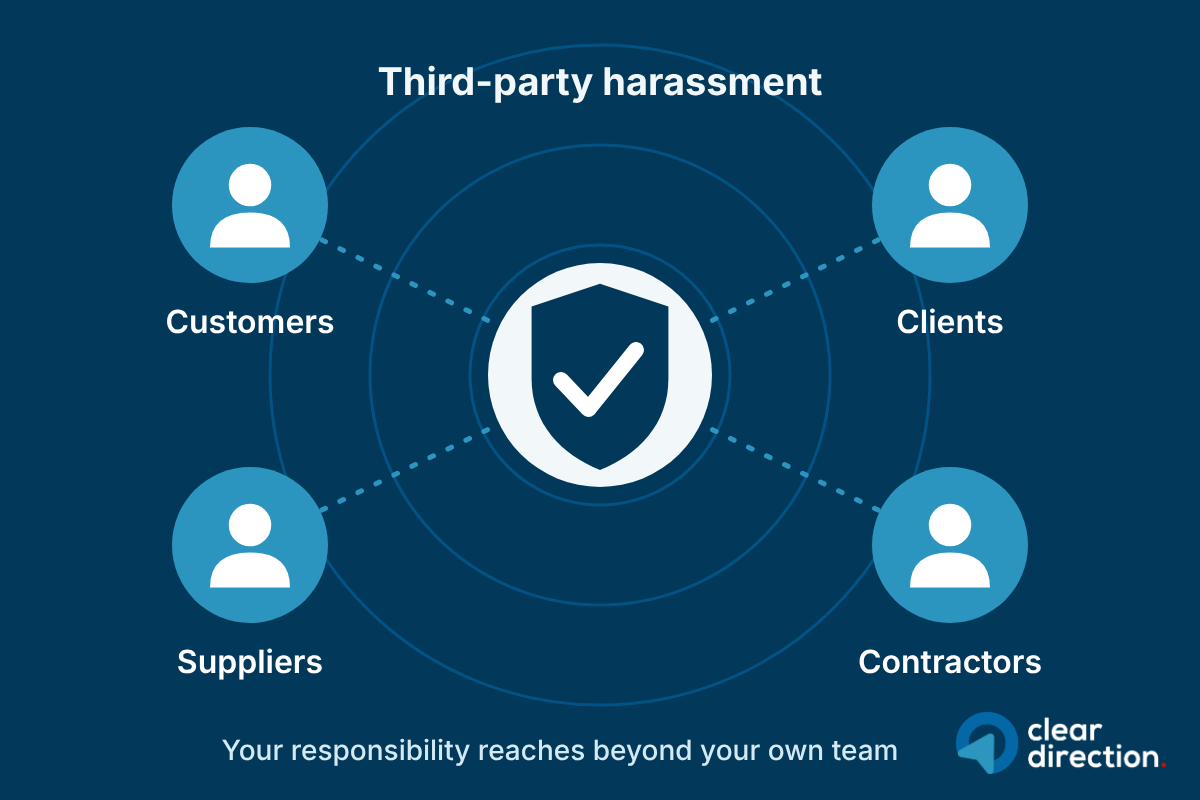
Sexual Harassment: What Is Changing on 30 October 2026
If you have not yet looked at your harassment policy this year, now is the time. On 30 October 2026 the legal duty on employers to prevent sexual harassment becomes tougher, and employers will be held responsible when the harassment comes from someone outside the business. This guide explains what is changing, why it matters, and what you should have in place.



































What is changing?
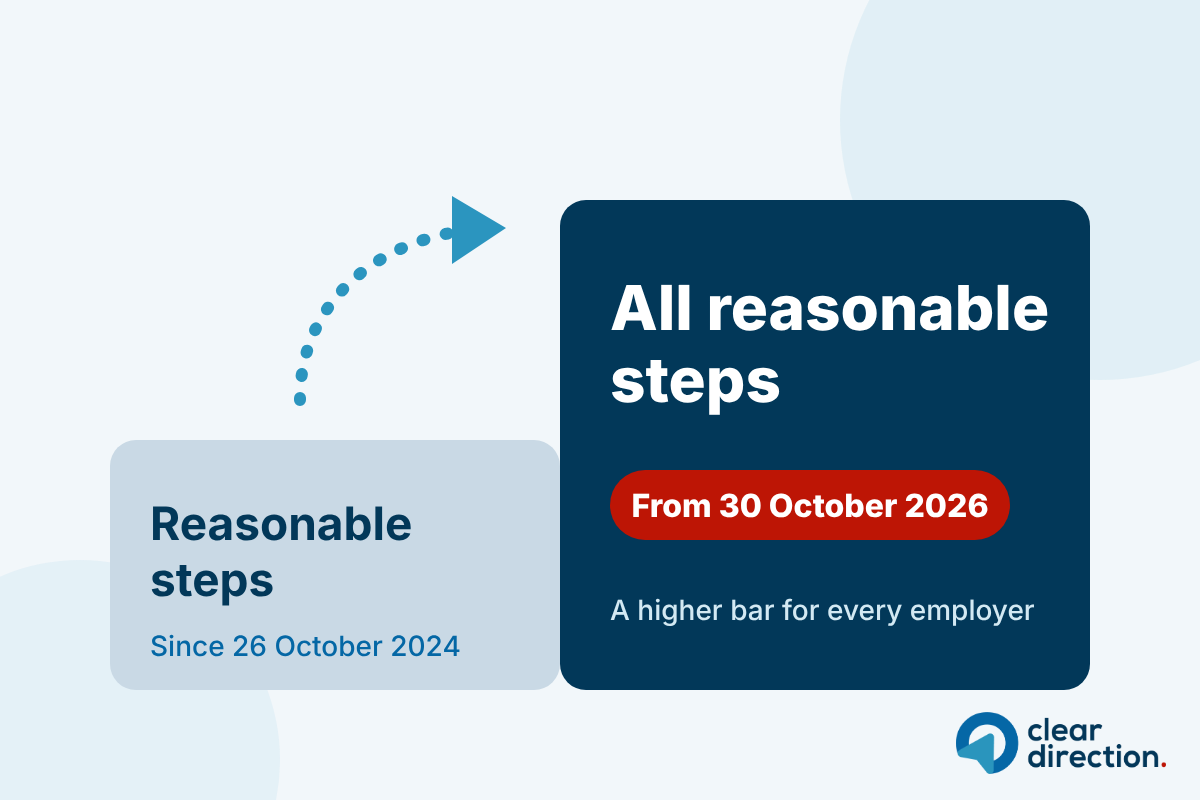
Since 26 October 2024, employers have had a duty to take "reasonable steps" to prevent sexual harassment of their employees. From 30 October 2026, that becomes "all reasonable steps".
The wording sounds like a small tweak. It is not. It matches the higher standard that already applies when an employer tries to defend itself against a harassment claim, so doing something will no longer be enough. You will need to show you did everything that was reasonable in your circumstances.
Third-party harassment
The second change is just as significant. Employers will be liable where a worker is harassed by a third party, such as a customer, client, supplier or contractor, and the employer has not taken all reasonable steps to prevent it.
Think of the hospitality worker who is regularly groped by a customer, or the care worker visiting a client's home. Those situations are exactly what this change is aimed at.
Many law firms read the third-party provision as covering harassment related to protected characteristics more widely, not only sexual harassment. We are keeping a close eye on how this is applied, and we suggest planning for the broader reading.
What this means for you
• A policy on its own is not enough. Tribunals will look at what you actually did.
• Risk matters. Lone working, late shifts, customer-facing roles and alcohol all raise the risk.
• There is a financial sting. If a sexual harassment claim succeeds and you have breached the preventative duty, a tribunal can increase compensation by up to 25%.
• The EHRC can act. The Equality and Human Rights Commission can investigate and enforce the duty.
Two related changes are worth knowing about. Since 6 April 2026, a disclosure about sexual harassment can qualify as a protected whistleblowing disclosure. And the government has signalled that rules limiting the use of non-disclosure agreements in harassment and discrimination cases are due from September 2027.
The government also plans to set out specific steps employers should take, but that is some way off, so the EHRC's existing guidance is the best benchmark today.
What needs to happen now...
1
Carry out a risk assessment
Cover every role and include customers, clients, suppliers and visitors.
2
Update your policies
Your anti-harassment, bullying and whistleblowing policies should cover third parties and say clearly how to report concerns.
3
Make reporting easy
Staff should know who to go to, and that they will be taken seriously.
4
Train Managers and staff
Include how to spot, challenge and escalate inappropriate behaviour, and refresh it regularly.
5
Plan your response to third parties.
Decide in advance what you will do if a customer or client crosses the line, and who has the authority to act.
6
Keep Records and Review
Written risk assessments, training logs and the action you took are your evidence if a claim arrives. Review at least annually. The duty is ongoing, so what you did last year may not be enough this year.
Do you have any questions?
If you would like us to review your policies, build a risk assessment or deliver manager training, get in touch.
01908 714542
hrsupport@cleardirectionhr.com
From 30 October 2026 employers must take “all reasonable steps” to prevent sexual harassment, and can be liable for third-party harassment. Here is what to do.